Observing Reports
By Michael Amato
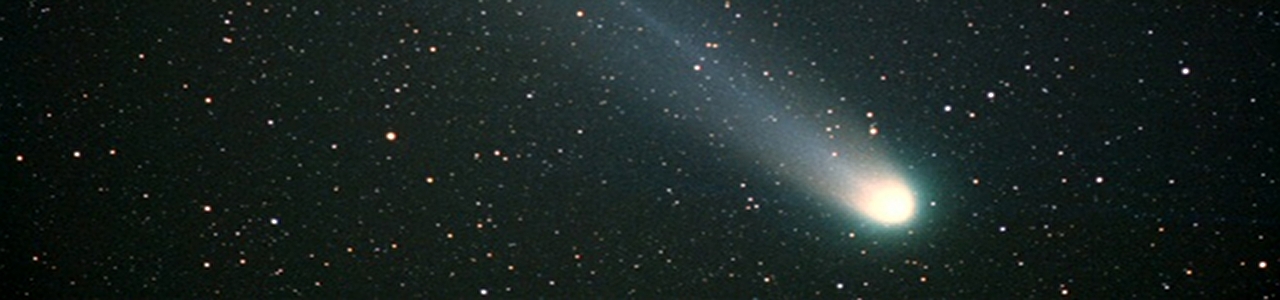
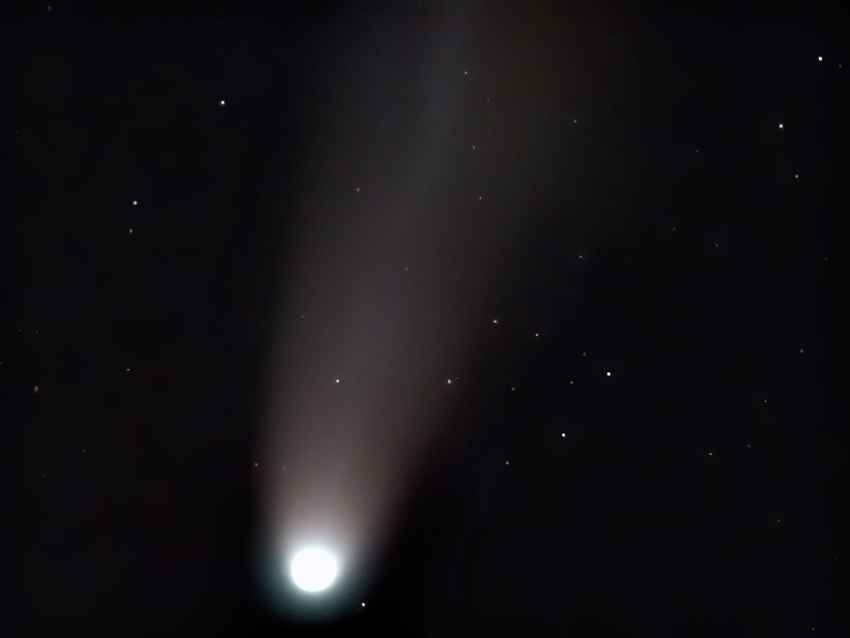
On October 9 before dawn at about 4:00 AM, my brother Anthony and I took out our Unistellar telescope to observe Comet Lemmon. As our image shows, the comet was looking nice through the scope. Since we purchased this telescope, viewing the sky has really been great. We also tried to observe Comet SWAN, but it was too low for us to see. By the third week of October, both comets will be easy to see in the western evening sky. We are looking forward to observing them then.
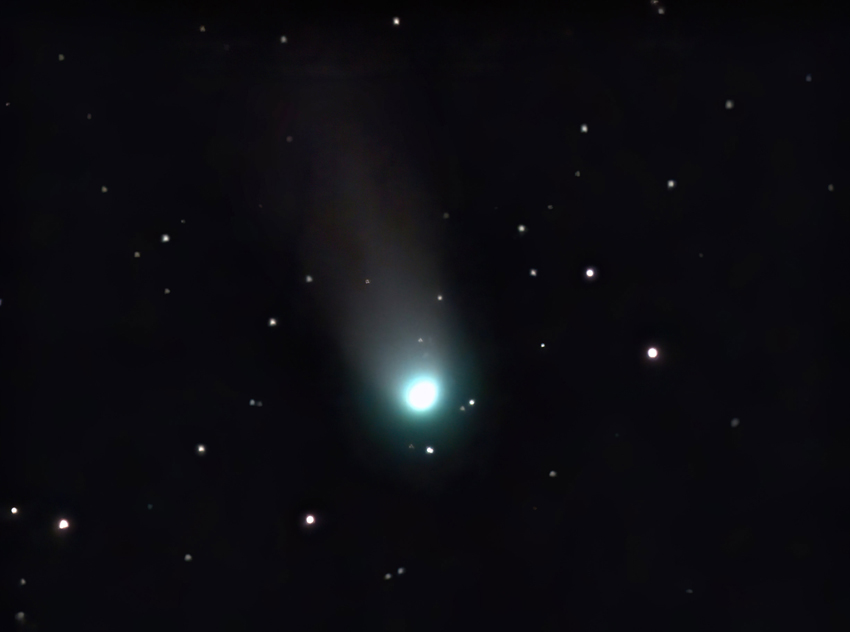
On October 21, after getting some nice views of Comet Lemmon, my brother Anthony and I turned our Unistellar telescope onto Comet SWAN. It looked bluer than green to us and our image shows that. We were not able to observe a tail on the comet but that blue green color was very impressive. I love comets!
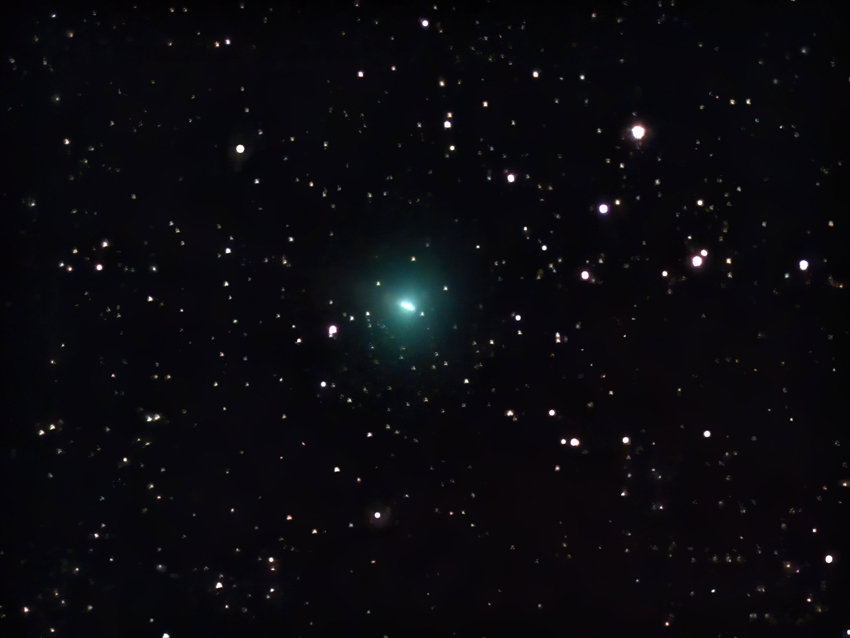
On October 26, Anthony, our friend Joe and I made a 25-minute exposure on Comet Lemmon with our Unistellar scope. There are some dark streaks in the comet’s tail which were caused by the solar wind. While our scope was continuing to make a long exposure to the comet, the three of us continued to observe the comet with an 8X40 and 10×50 binoculars. Even with our binoculars, we could see the bright streaks in the comet’s tail. When our scope finished with Comet Lemmon, we turned the scope to view two faint comets, C2025 T1 Atlas and C2024 E1 Wierzchos. These were only small smudges in our scope, but we were able to add them to our comet count for the evening. It was a great night for the three of us.
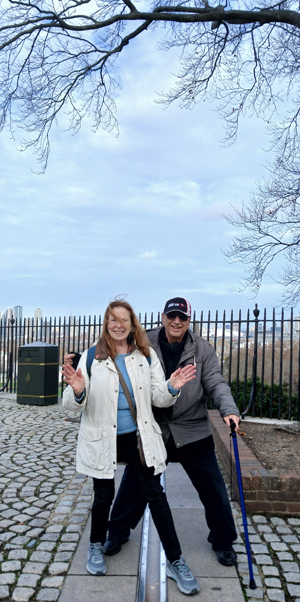
Last fall, Rose and I made a trip to London, England. While we were there, we took a boat up the Thames River to see the Royal Observatory in Greenwich. An imaginary line divides the Western Hemisphere and the Eastern Hemisphere. In the accompanying image Rose and I have our right legs in the Eastern Hemisphere and our left legs are in the Western Hemisphere. Everyone was taking photos like this over there. We also toured the Royal Observatory, and that was worth the whole trip. One interesting photo was a telescope that was put into the ground during the 1800s pointing straight up. The reason the astronomers tried this was because they figured that pointing the scope straight up from underground would allow them to view the sky without too much interference from the atmosphere. After a couple of years, the scope was being damaged by ground water and they had to haul it out and end the project. There were a lot of photos showing the astronomers that worked there and the telescopes they used. Finally, we went to a room that housed quadrants, sextants and alidades. If you go to England someday, make sure you see the Royal Observatory and stand on two hemispheres at once.
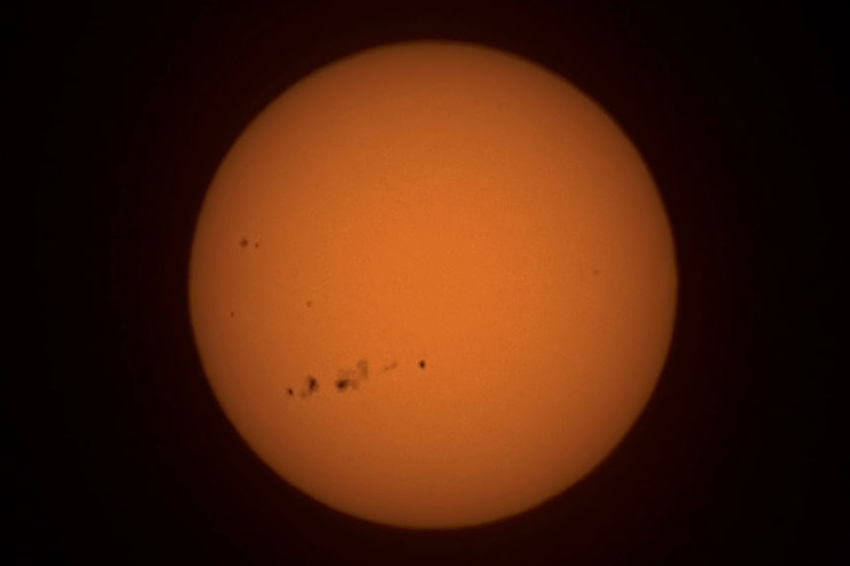
In early December, my brother and I observed a large group of sunspots going across the Sun’s face with two of our telescopes. He took this image on December 3. On December 4, it looked like more sunspots were growing on the Sun’s face.