links will be here
ASNH Message Center


Support the IDA

Keep Looking


up!

starbook.jpg (1659 bytes)

wtc.jpg (2523 bytes)

The Astronomical Society of New Haven, Inc.

is a non-profit, scientific and educational organization which fosters new and continuing interest in amateur astronomy.

The general membership meetings are open to the public and attendance is encouraged.

To contact any individual listed on these web pages, please address all correspondence to: The Astronomical Society of New Haven, 111 Hilldale Road, Bethany, CT 06524

Web site background supplied by Software Bisque The Sky 6


Events for January

ASNH_Events - Jan 2012

ASNH_Events Calendar - Jan 2012

FaviconTue Jan 3 2012: ASNH BOD Meeting 

Tue Jan 3 2012 7:00 PM:

FaviconFri Jan 20 2012: Open House Bethany Observing Station Public Observing (CANCELLED) 

Fri Jan 20 2012 7:00 PM: Once a month the Observatory is opened to the public

Outreach Events for this week

ASNH_Events - Week of 1/22/2012

ASNH_Events Calendar - Week of 1/22/2012

Astronomical Events for January

NASASkyCal12 by Fred Espenak and Sumit Dutta (NASA's GSFC) - Jan 2012

NASASkyCal12 by Fred Espenak and Sumit Dutta (NASA's GSFC) Calendar - Jan 2012

FaviconSun Jan 1 2012: Venus: 34° E 

Sun Jan 1 2012 12:00 AM: Venus: 34° E

FaviconSun Jan 1 2012: First Quarter 

Sun Jan 1 2012 1:15 AM: First Quarter

FaviconMon Jan 2 2012: Moon Apogee: 404600 km 

Mon Jan 2 2012 3:19 PM: Moon Apogee: 404600 km

FaviconWed Jan 4 2012: Quadrantid Shower: ZHR = 120 

Wed Jan 4 2012 2:23 AM: Quadrantid Shower: ZHR = 120

FaviconWed Jan 4 2012: Perihelion: 0.9833 AU 

Wed Jan 4 2012 10:59 PM: Perihelion: 0.9833 AU

FaviconThu Jan 5 2012: Moon-Pleiades: 3.1° N 

Thu Jan 5 2012 4:17 AM: Moon-Pleiades: 3.1° N

FaviconFri Jan 6 2012: Moon Descending Node 

Fri Jan 6 2012 9:30 AM: Moon Descending Node

FaviconFri Jan 6 2012: Moon North Dec.: 22.5° N 

Fri Jan 6 2012 4:46 PM: Moon North Dec.: 22.5° N

FaviconMon Jan 9 2012: Full Moon 

Mon Jan 9 2012 2:30 AM: Full Moon

FaviconMon Jan 16 2012: Moon-Spica: 2° N 

Mon Jan 16 2012 2:21 AM: Moon-Spica: 2° N

FaviconMon Jan 16 2012: Last Quarter 

Mon Jan 16 2012 4:08 AM: Last Quarter

FaviconTue Jan 17 2012: Moon Perigee: 369900 km 

Tue Jan 17 2012 4:28 PM: Moon Perigee: 369900 km

FaviconThu Jan 19 2012: Moon Ascending Node 

Thu Jan 19 2012 1:26 PM: Moon Ascending Node

FaviconThu Jan 19 2012: Moon South Dec.: 22.5° S 

Thu Jan 19 2012 9:12 PM: Moon South Dec.: 22.5° S

FaviconMon Jan 23 2012: New Moon 

Mon Jan 23 2012 2:39 AM: New Moon

FaviconMon Jan 30 2012: Moon Apogee: 404300 km 

Mon Jan 30 2012 12:42 PM: Moon Apogee: 404300 km

FaviconMon Jan 30 2012: First Quarter 

Mon Jan 30 2012 11:10 PM: First Quarter

FaviconTue Jan 31 2012: First Quarter 

Tue Jan 31 2012 11:10 PM: First Quarter

Online Store

Astronomy News

SPACE.com

Something amazing every day.

FaviconRetired Satellite's Fall From Space Exceeds NASA Safety Rules 27 Jan 2012, 1:02 pm

The forecast for the Rossi X-ray Timing Explorer's re-entry projects a return between 2014 and 2023.

(image/jpeg)

FaviconRecord-Setting Astronaut Retires from NASA 27 Jan 2012, 12:43 pm

NASA astronaut Jerry Ross, the first person to fly seven space missions, has left the agency.

(image/jpeg)

FaviconBus-Size Asteroid Buzzes Earth in Close Flyby 27 Jan 2012, 10:49 am

The asteroid 2012 BX34 came within 36,750 miles of Earth.

(image/png)

FaviconRussia Evaluates Space Capsule Cracks Ahead of March Launch 27 Jan 2012, 10:17 am

The Soyuz TMA-04M is slated to launch to the orbiting complex on March 29.

(image/jpeg)

FaviconGOP Candidates Clash Over US Space Exploration Future 27 Jan 2012, 9:22 am

The four remaining contenders discussed NASA and spaceflight last night in Florida.

(image/jpeg)

APOD for Today

APOD

Astronomy Picture of the Day

FaviconNGC 3239 and SN 2012A 

About 40,000 light-years across, pretty, irregular galaxy About 40,000 light-years across, pretty, irregular galaxy


FaviconNGC 4449: Star Stream for a Dwarf Galaxy 

A mere 12.5 million light-years from Earth, irregular A mere 12.5 million light-years from Earth, irregular


FaviconOpportunity Rover Spots Greeley Haven on Mars 

Where on Mars should you spend the winter? Where on Mars should you spend the winter?


FaviconJanuary Aurora Over Norway 

What's that in the sky? What's that in the sky?


FaviconDeep Orion Over the Canary Islands 

Which attracts your eye more -- the sky or the ground? Which attracts your eye more -- the sky or the ground?


NASA Image Of The Day

NASA Image of the Day

The latest NASA "Image of the Day" image.

FaviconCloud streets off of the Aleutian Islands 27 Jan 2012, 12:00 am

Strong winds polished the snow of southwestern Alaska and stretched marine stratocumulus clouds into long, parallel streets in early January, 2012. After crossing Bristol Bay, the winds scraped the clouds across the tall volcanic peaks of the Aleutian Islands. As the wind impacted the immobile mountains, the airflow became turbulent, swirling in symmetric eddies and carving intricate patterns into the clouds on the leeward side of the islands. At the top of this image, the bright white color indicates a thick layer of snow overlying the land of southwestern Alaska. The pristine white is broken by the rugged Ahklun Mountain Range in the east, which is partially covered by a bank of clouds. Off the coast of Alaska, sea ice floats in Bristol Bay, cracked and chipped by the flow of the waters which lie underneath. A few cloud streets – parallel lines of clouds – can be seen in the far northwest over land. The clouds increase over the sea ice and become thick over open water, where row upon row of clouds lie close in perfectly parallel formation. The Aleutian Islands stretch from northeast to southwest across the image. Sea ice, which is bright white here, lies on the windward side of the islands. A few of the tallest volcanic peaks can be seen rising from the icy islands. The character of the cloud streets change as they impact the Aleutians, especially near the center of the image, where two rows of beautifully symmetric swirls of eddies in the clouds stretch across the sky. These swirling formations are known as von Karman vortex streets. This true-color image was captured by the Moderate Resolution Imaging Spectroradiometer (MODIS) aboard NASA’s Terra satellite on January 11, 2012. Image Credit: NASA/GSFC/Jeff Schmaltz/MODIS Land Rapid Response Team

(image/jpeg; 1.18 MB)

NASA News

NASA Ames Research Center - News and Features

Ames News RSS

FaviconNASA's Kepler Announces 11 Planetary Systems Hosting 26 Planets 26 Jan 2012, 12:00 am


NASA's Kepler mission has discovered 11 new planetary systems hosting 26 confirmed planets.

FaviconEducators Selected to Fly on NASA's SOFIA Airborne Observatory 25 Jan 2012, 12:00 am


Twenty-six educators from the United States have been selected for research flights aboard SOFIA, NASA's Stratospheric Observatory for Infrared Astronomy. As participants in the Airborne Astronomy Ambassadors program, the educators will partner with professional astronomers using SOFIA for scientific observations in 2012 and 2013.

FaviconNASA Joins MIT and DARPA for Out-of-This-World Student Robotic Challenge 18 Jan 2012, 12:00 am


NASA will join MIT, DARPA, and high school student teams from the U.S. and abroad for the third annual Zero Robotics SPHERES Challenge.

FaviconNASA Clears The Runway For Open Source Software 18 Jan 2012, 12:00 am


The NASA Open Government Initiative has launched a new website to expand the agency’s open source software development.

Favicon8 Questions about NextGen, Part 1 18 Jan 2012, 12:00 am


Leighton Quon answers eight questions about what NASA is doing to help improve air transportation for all of us in the future.

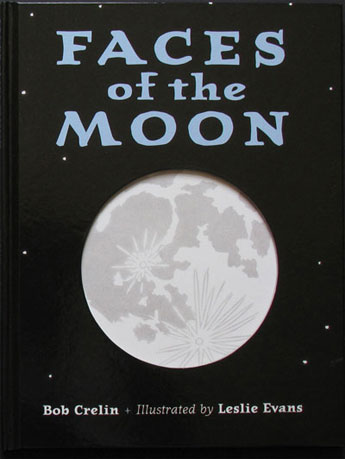
Faces of the Moon

A new book by ASNH member Bob Crelin

Click the book below for information on the book
There Once Was A Sky Full Of Stars

A new book by ASNH member Bob Crelin

Click the book below for information on the book

Astronmical Games!

Test your skill at Word Puzzles

Please visit the supplier of the games Crossword Forge


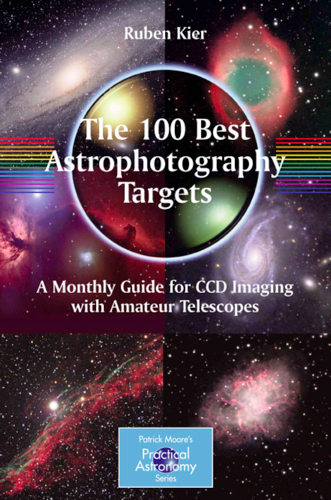
The 100 Best Targets for Astrophotography

A new book by ASNH member Ruben Kier

Click the book below for a review from Springer.com
How the ISS comes together (Click image to view animation)